book review · From Bacteria to Bach and Back
From Bacteria to Bach and Back
2026-05-27 · 3 min read
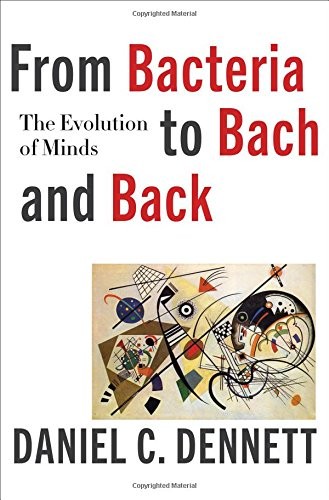
I’ll admit up front that I don’t think I’d pass a test on this book if you gave me one right now, it’s dense, and Dennett is working through decades of thinking on consciousness in a way that assumes you’re willing to sit with an argument across multiple chapters before it fully lands. What did get through to me was the central move, treating consciousness and language as things that evolved the same way culture does, an evolutionary process operating on ideas rather than genes, competing and mutating and surviving the way organisms do.
The Bach in the title isn’t decorative, there’s a real argument here about how minds capable of producing something like Bach’s counterpoint got built up in stages from much simpler processes, comprehension without comprehension as one way I’ve seen the idea phrased elsewhere, complex behavior emerging from parts that individually understand nothing at all. That’s the thread that stuck with me longest after finishing, the idea that understanding itself might be a late arriving property built on top of a huge stack of processes that don’t understand anything on their own.
This isn’t a book that holds your hand, and I went back and reread a few sections more than once to make sure I had the actual claim right rather than a simplified version of it in my head. If you’ve read Dennett before you know his style, patient, a little combative with other philosophers of mind, willing to spend a chapter dismantling an idea before offering his own replacement. If this is your first Dennett, it’s a demanding place to start, but I don’t think it’s a bad one.
Worth the effort if you’re willing to give it, and worth rereading the harder sections rather than pushing through them once and moving on.